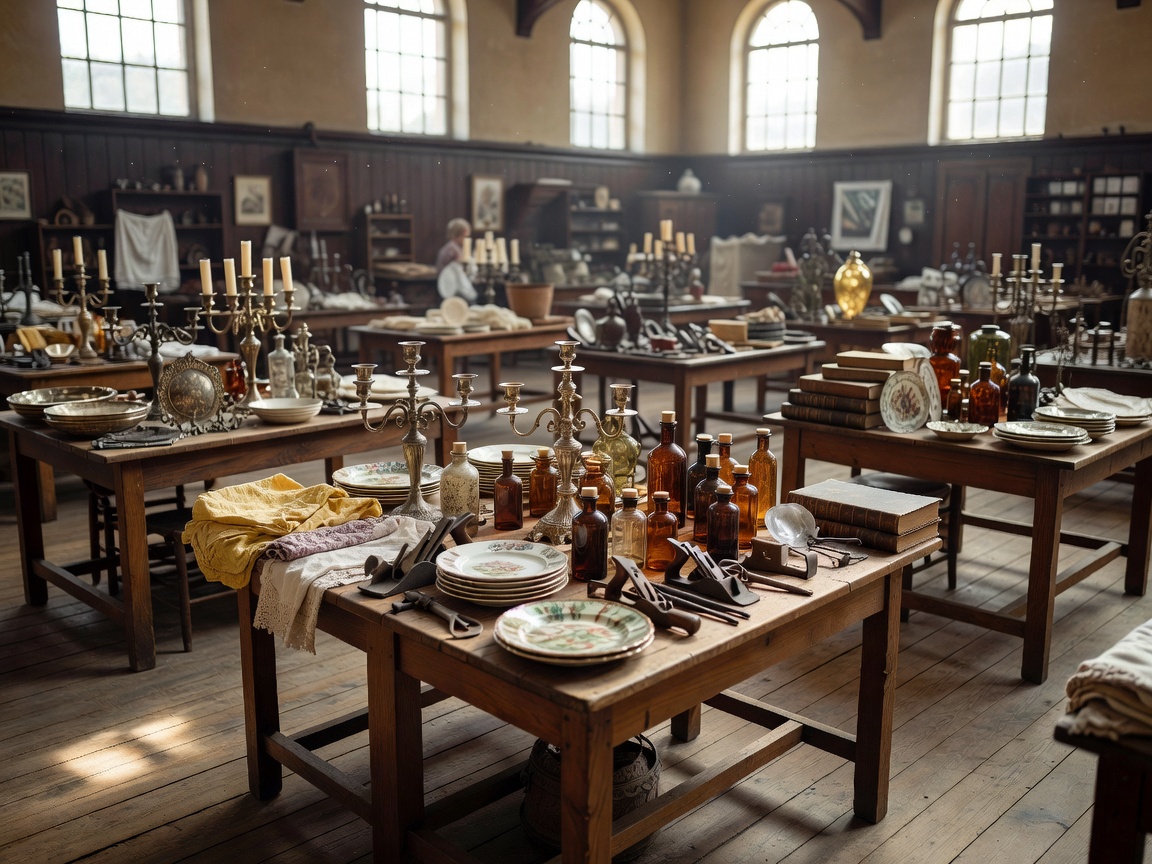
Flea markets
Flea markets usually combine household clearances, second-hand goods, small antiques and contemporary items. The range is broad. The atmosphere can be fast and informal. Prices, descriptions and condition records vary by stall.
Buying approach: scan quickly, return for closer checks and carry a tape measure. Advantage: breadth and discovery. Limitation: inconsistent information. Plan for cashless and cash payment possibilities without assuming either is available.
Antique fairs
Antique fairs gather multiple dealers in a defined venue. Stock is often more selected than at a flea market. Dealers may know construction, ownership history or restoration details, but the level of documentation differs.
Allow time to compare similar objects. Ask whether a piece has been repaired, refinished, rewired or structurally altered. Entry arrangements, opening periods and event rules vary by organiser.
Dealer markets
Dealer markets operate through permanent or semi-permanent stalls, rooms or units. They suit repeat visits and focused browsing. Object categories may be easier to locate than at an open flea market.
The limitation is that inventories change and a district may contain both specialist and general sellers. Research the current location directly. Do not assume a historic market remains active in the same form.
Specialist fairs
Specialist fairs focus on categories such as books, design, ceramics, watches, textiles or military material. They are useful when you already understand terminology and want comparison within one field.
Specialisation does not remove risk. Marks can be misread, repairs can be understated and condition can be difficult to judge under busy lighting. Bring reference notes and define a maximum budget before arrival.
Vintage markets
Vintage markets generally focus on twentieth-century clothing, furniture, graphics, household design and popular culture. The term “vintage” is broad. It can include original period objects, later reproductions and selected second-hand goods.
Check materials, labels, electrical safety and wear. For clothing, measure the garment rather than relying on a stated size.
Brocante-style markets
Brocante-style events often blend rural clearances, decorative objects, household goods and small furniture. They can be outdoor, seasonal or linked to local community activity. Their character varies by region and organiser.
Weather affects stock and condition. Carry protective wrapping, avoid buying fragile objects before a long walking route and confirm collection options for larger pieces.
Market halls
Covered halls provide shelter, lighting and a more stable browsing route. They may contain permanent dealers, temporary stalls or food and general retail alongside antiques. Their architecture can be historic, but the current commercial function must be checked independently.
Auction-linked events
Auction-linked viewing periods can offer structured catalogues and specialist categories. They also involve estimates, buyer terms, collection deadlines and contractual conditions. A catalogue description is not a guarantee of authenticity or condition.
Read the current terms before bidding. Account for fees, taxes, transport and failed collection. Never treat an estimate as a valuation or investment forecast.
Planning checklist
- Confirm the current venue and operating information.
- Choose the format that matches your object category.
- Bring measurements, packing material and a written budget.
- Ask about repairs, provenance and documentation.
- Check payment, collection, export and insurance requirements.